
After two years of development, last year was less about big visual changes and more about making the game feel solid and reliable. I am not saying that visual changes were smaller, but there is no huge leap between start and the end of the year.
A lot of work went into smoothing out combat, enemy behavior, visuals, controls, saving/loading, and the overall “feel” of playing. Kind of improvements you notice while playing, even if they are not always obvious in screenshots. Many of the core systems also reached a point where adding new content should be much easier going forward.
Combat, Items, and Progression
A large part of 2025 was focused on improving how combat and items feel during actual play. Equipment now wears down through use. Weapons, armor, and shields slowly lose durability, with shields offering extra protection during combat, but wearing out faster.
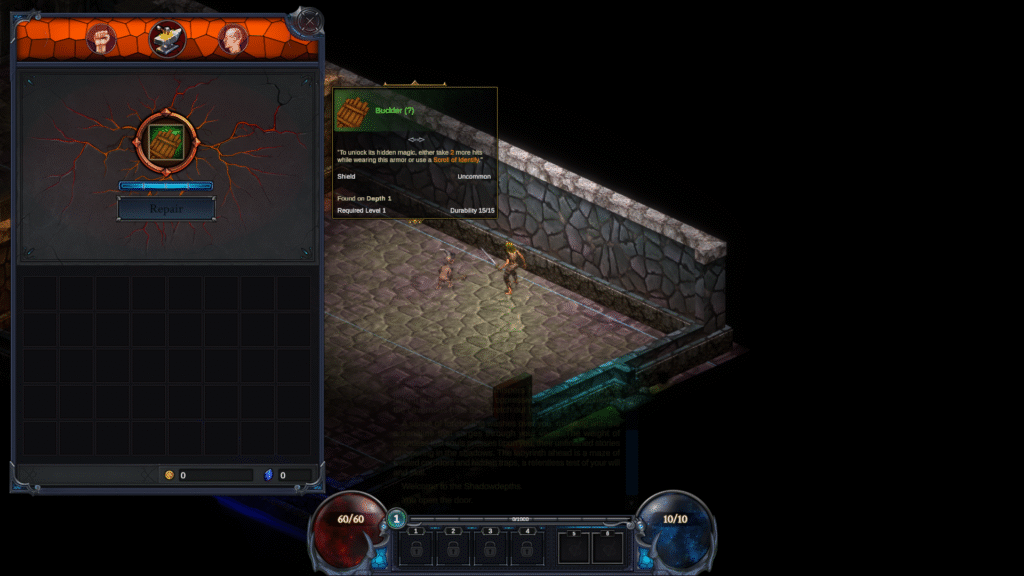
Repairing was added to the game and it is not a risk free action. It takes time, leaves you exposed while nearby enemies get to act. As a side effect it can even reduce an item’s maximum durability over time. Not every item can be repaired, and the UI makes it clear what can and cannot be fixed.
Item identification was also expanded and made more consistent. Weapons and armor reveal their properties through use in combat, and rings and amulets become known just by wearing them.
Magic became a real part of the game this year. Spells were introduced and built up from the ground, with clear distinct of casting, traversal and hit effects. Early spells include firebolt, lightning bolt, chaotic spark, icebolt and healing. There is already some interaction with the environment, and this is an area that will likely become much more important in the future.
Potions and scrolls have their own little “guessing game” exploration system: when you find one, the game presents 3-5 possible consumables, based on your magical affinity. Only one possibility is correct. When you drink a potion, you find out what it actually does, and it’s not always what you expect.
Once a potion or scroll type is identified you narrow further possibilities so it is much more easier to guess.
Scrolls and potions are now fully part of the loot system, with only 2 scrolls but with 24 potions.
Enemies
Enemy behavior was one of the areas that changed the most during 2025.
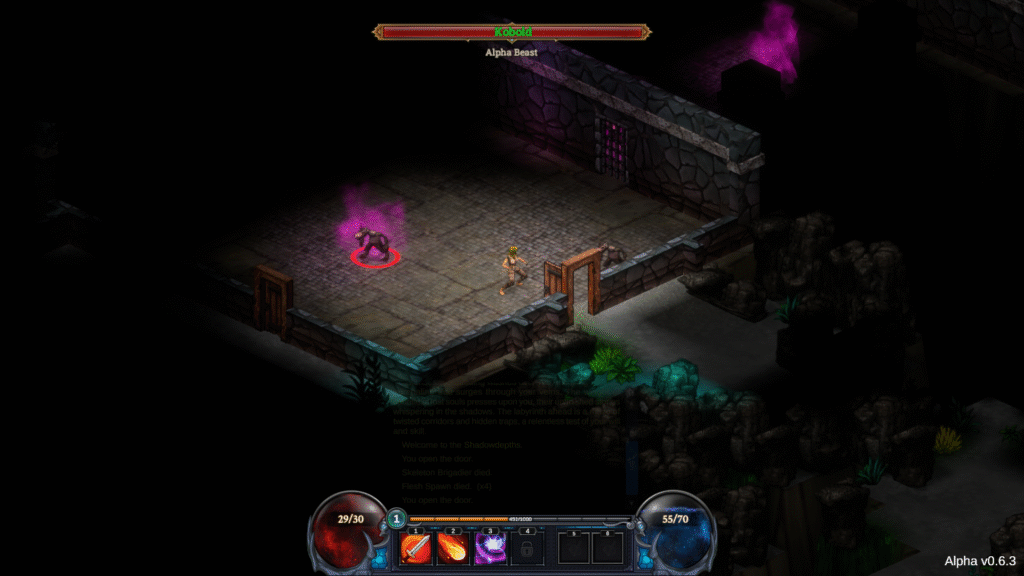
All enemy data was moved out of hardcoded setups and into CSV tables. These tables define things like stats, abilities, triggers, auras, visuals, particles, and sounds. Adding or tweaking an enemy is now mostly a matter of editing data instead of touching code or prefabs. This also opens the door for future modding, since enemies can be created or adjusted without rebuilding the game itself.
On the game AI side, a proper state-based system replaced earlier, more improvised logic. Enemies now act more naturally, but we still have here room for improvements.
Several new enemy types and variations were added over the year, including:
- oozes that split into smaller versions and can steal your weapon
- caustic bloats that explode on close range and spread dangerous gases
- multiple zombie variants
- A tougher champion/elite enemies with better loot
- tribe-based enemies
- plague-themed enemies with time-shifted movement
Under the hood, enemy movement and decision-making was made much faster and more efficient. The pathfinding and navigation system was heavily optimized and separated into its own module. This allows enemies to move, chase, flee, and wander smoothly even on larger levels with hundreds of them in real time, without hurting performance.
Dungeon Generation
Dungeon generation continued to grow in depth, but also became much easier to control and fine-tune.
Level layouts were moved into visual editor assets, which makes it possible to tweak rooms, corridors, and layouts directly in the editor instead of relying purely on code. The generation rules were refined so the dungeon respects different room types, weights, and restrictions, while still producing varied and believable results.
A number of new dungeon features were added over the year, including:
- environmental variations such as overgrown levels, abyss fog, fireflies, animated lava, and dynamic fog layers
- sliding and secret doors
- special dungeon decorators
- portcullises with proper levers and switches
- traps hidden inside barrels and other props
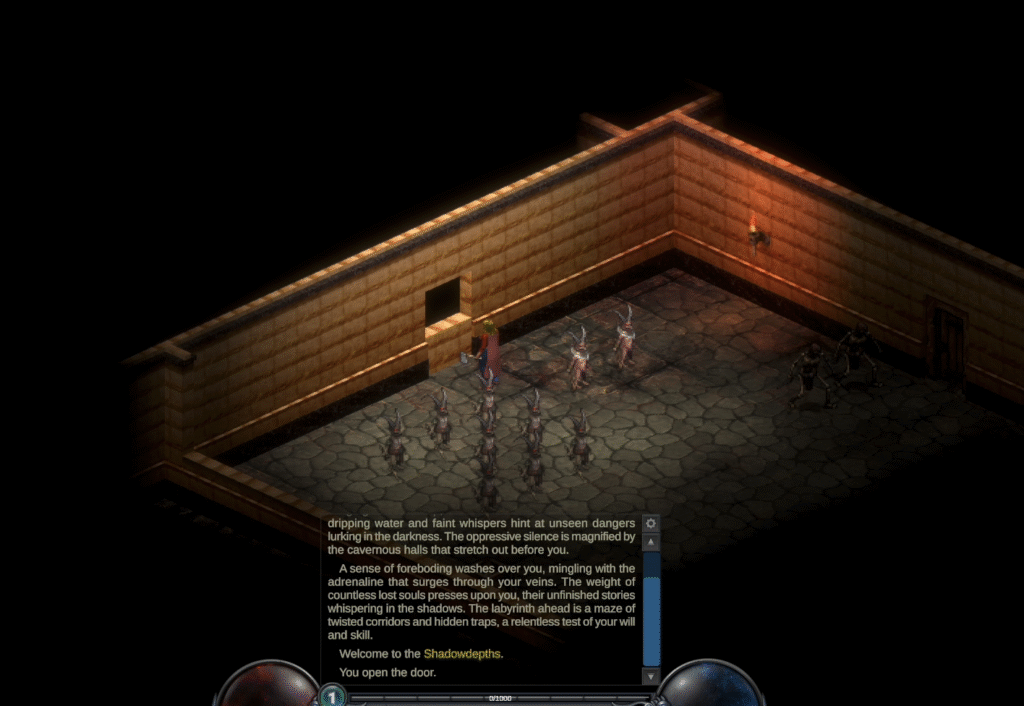
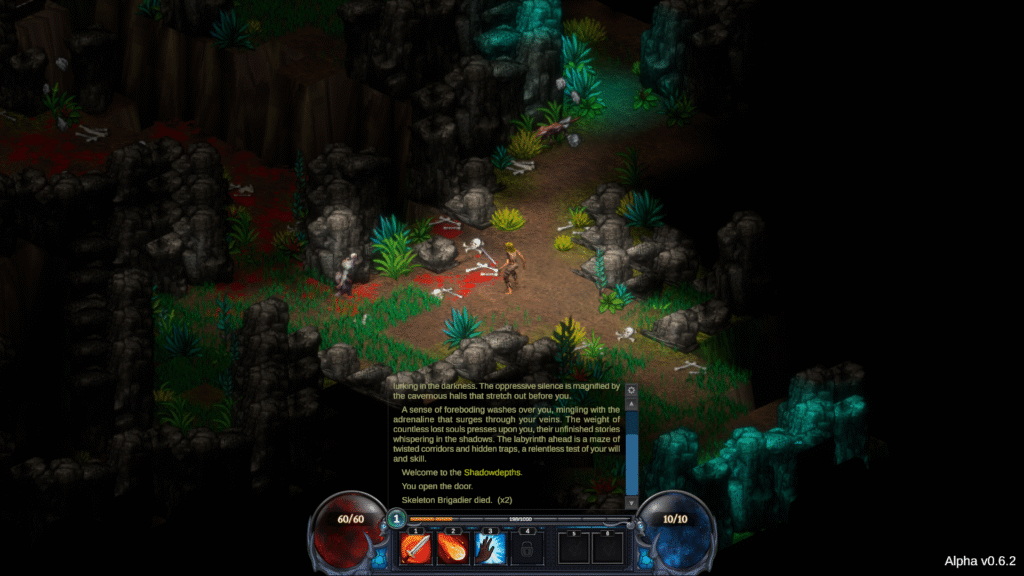
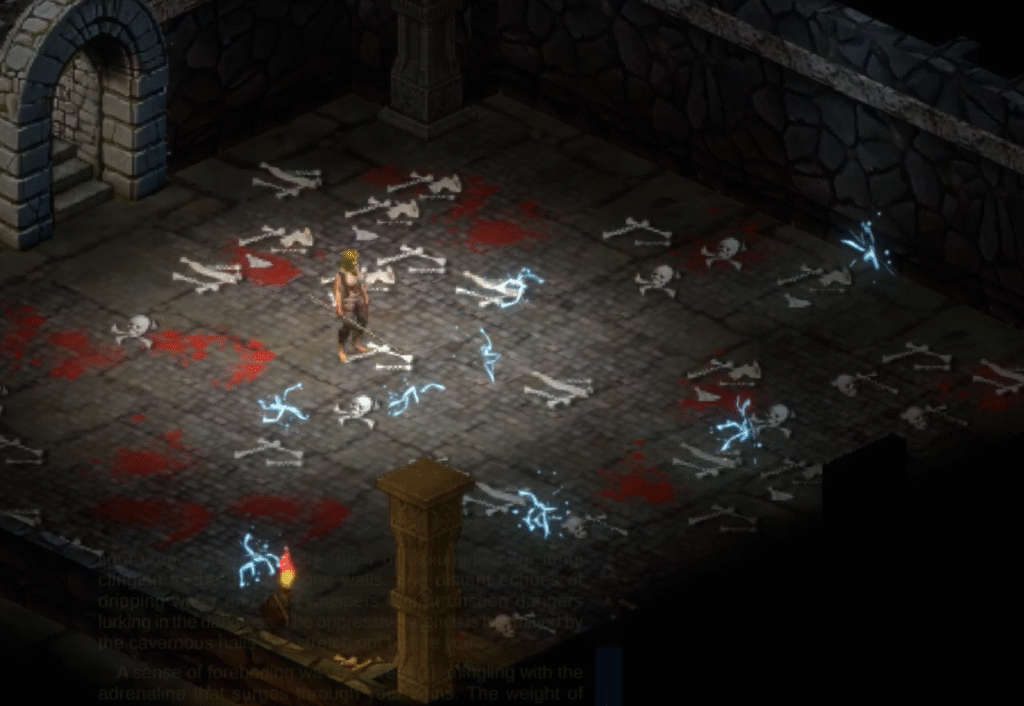
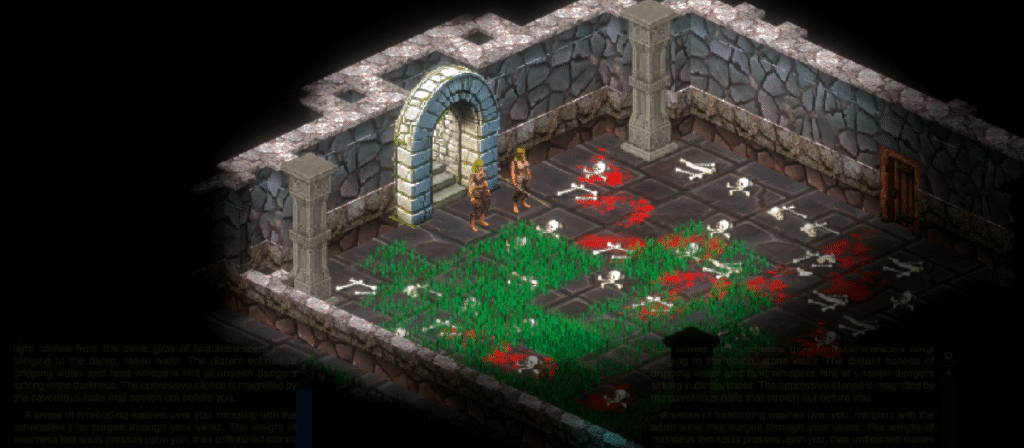
Decoration also became more important. Columns, bones, blood pools, vegetation, and cave plants are now placed procedurally to give each level more character. To keep performance solid even with lots of detail, vegetation was optimized so large numbers of decorative objects can exist without slowing the game down.
Rendering, Animation, and Visuals
Visual quality and consistency were also improved steadily throughout the year, often through many small but meaningful refinements rather than one big overhaul.
Dungeon walls received a lot of attention. Their shapes and shading were improved to better convey depth, visibility, and occlusion. Door openings were corrected, and transparency issues were fixed. Water and lava also got visual upgrades, with more natural-looking movement, better reflections, and clearer separation from the surrounding terrain.
Rendering for both players and enemies was simplified behind the scenes. Instead of relying on many layered renderers, characters now use a more unified setup (although this was removed for the players).
One of the biggest changes late in the year was moving the player character from pre-rendered 2D sprites to 3D models. It ismuch easier to add new gear, animations, or even entirely new races in the future. The animation system was adjusted along the way it mimics sprite based animation, and you would not notice the difference between the two.
Input, UI/UX
A lot of effort also went into making the game feel comfortable and intuitive to play, regardless of how you prefer to control it.
All input handling was brought into a single, centralized system. This made it much easier to control when and how inputs are controlled. Different control setups are now supported out of the box:
- keyboard
- mouse
- gamepad
- mixed two player setups
- Mixed on player setup
The UI also received a lot of polish. Inventory panels and on-screen elements were slightly animated for better feedback, level entry text was redesigned. Popups, debuffs, item identification, equipment wear, and errors were made clearer.
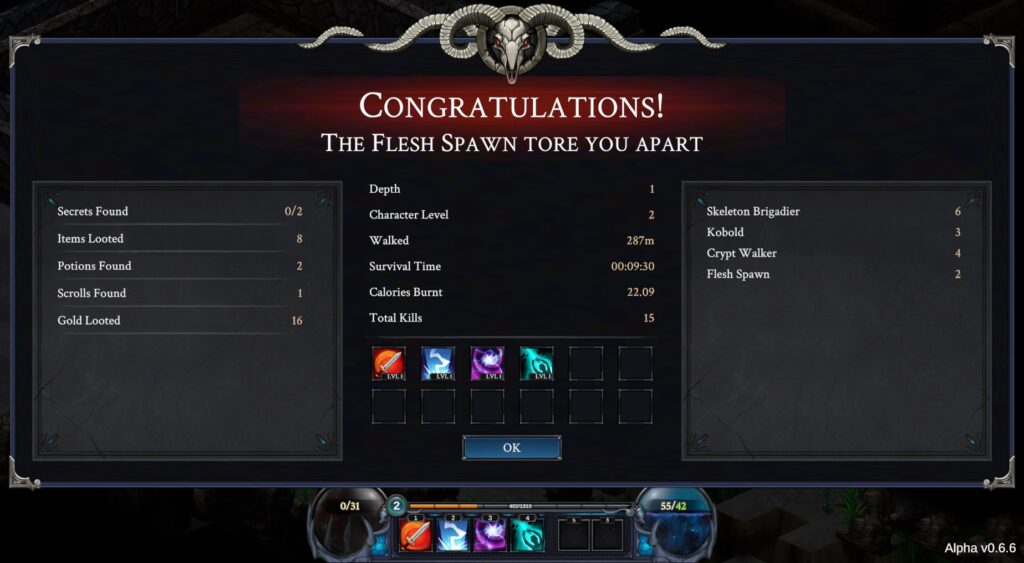
Another UI addition late in the year was a full death screen with run statistics. It tracks key events throughout the run (movement, attacks, hits, dodges, kills, and more), then summarizes everything at the end. Each enemy type has its own entry with a bit of flavor text, unlocked spells are shown there too, and the whole screen is fully localized.
Performance and Stability
A lot of time went into making the game feel faster and smoother. Startup times were shortened, loading pauses were reduced. Most of this came from careful cleanup and simplification rather than nig changes.
Dungeon generation itself is now quick enough that it barely breaks the flow of play, and starting a new run feels almost instant.
Tooling, Automation, and Community
Alongside the core game work, a fair amount of time went into tooling, automation, and building a tiny community.
A custom debug UI was built to replace third-party solutions that weren’t usable in this setup. This made it possible to inspect and debug the game even in standalone builds. Editor tools were also expanded, allowing dungeon layouts and generation setups to be edited and previewed visually, which significantly improved iteration speed.
A Discord server for Scaledeep was set up and as part of that, a custom Discord bot called Mr.Tob was developed and. Mr.Tob posts changelogs directly from Git merge requests, mirrors WordPress devlogs into Discord channels, and has been made stable enough to run continuously without dropping offline. Additional automation was added to repost devlog updates to Reddit via RSS feeds.
The Scaledeep website was rebuilt and expanded with dedicated pages for storylines, heroes, and long term design goals. These changes brought the website, Steam page, and devlogs into better alignment, while basic analytics were added engagement over time.
Looking Ahead
By the end of 2025, Scaledeep feel much polished than previous year.
Early Access remains the next major milestone, and although I wanted to approach this milestone in December 2025, I was not able to met my goal.
Leave a Reply